You're not alone in this
Many families abroad know the Gregorian date a loved one passed away but not the lunar tithi. That's a very common starting point, and there is no need to feel you have fallen short.
A few things that help
- the tithi is a lunar day, so the Gregorian death date alone is not always the annual ritual date;
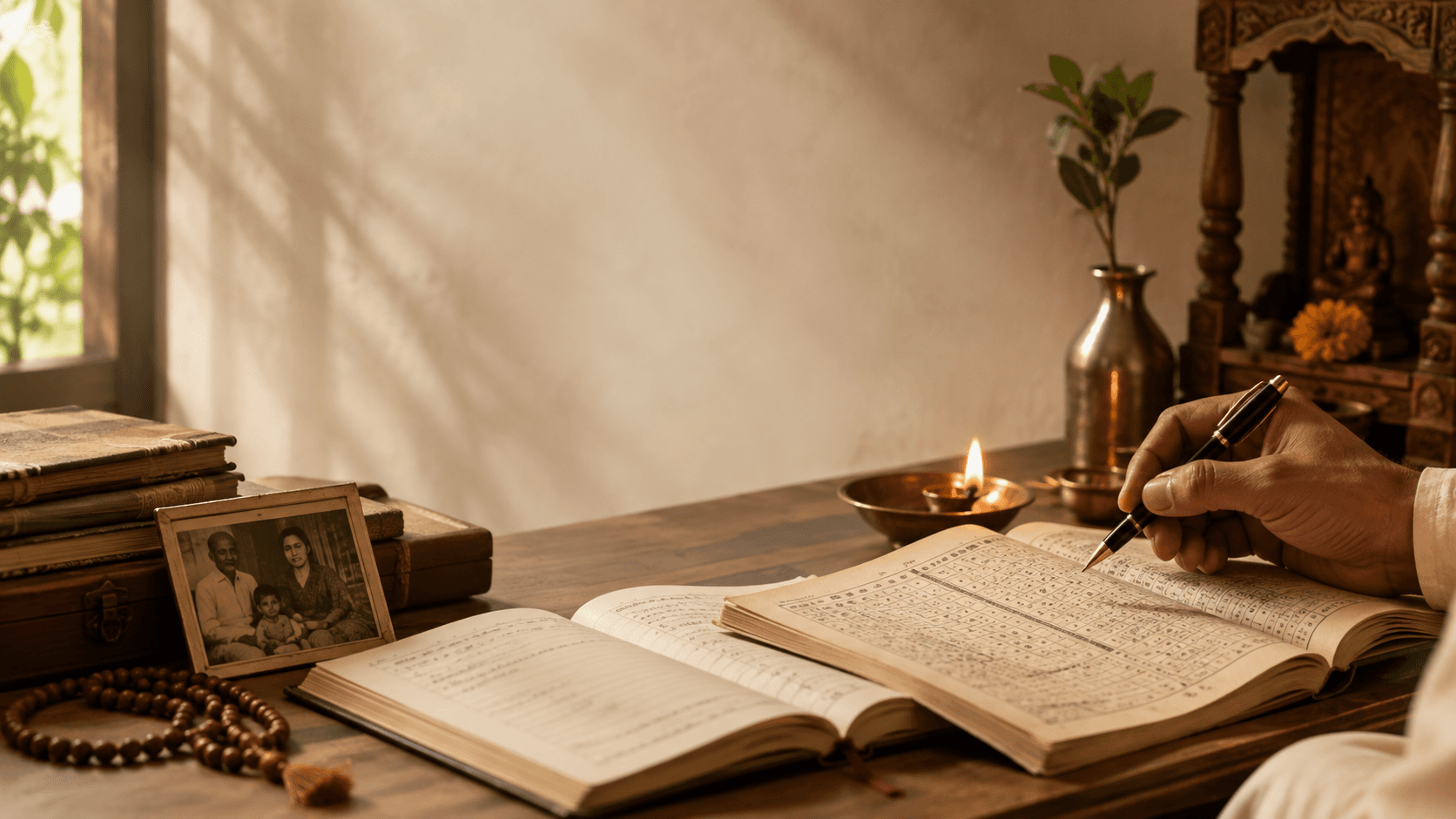
- family records, elders or an old invitation or note can hold the tithi;
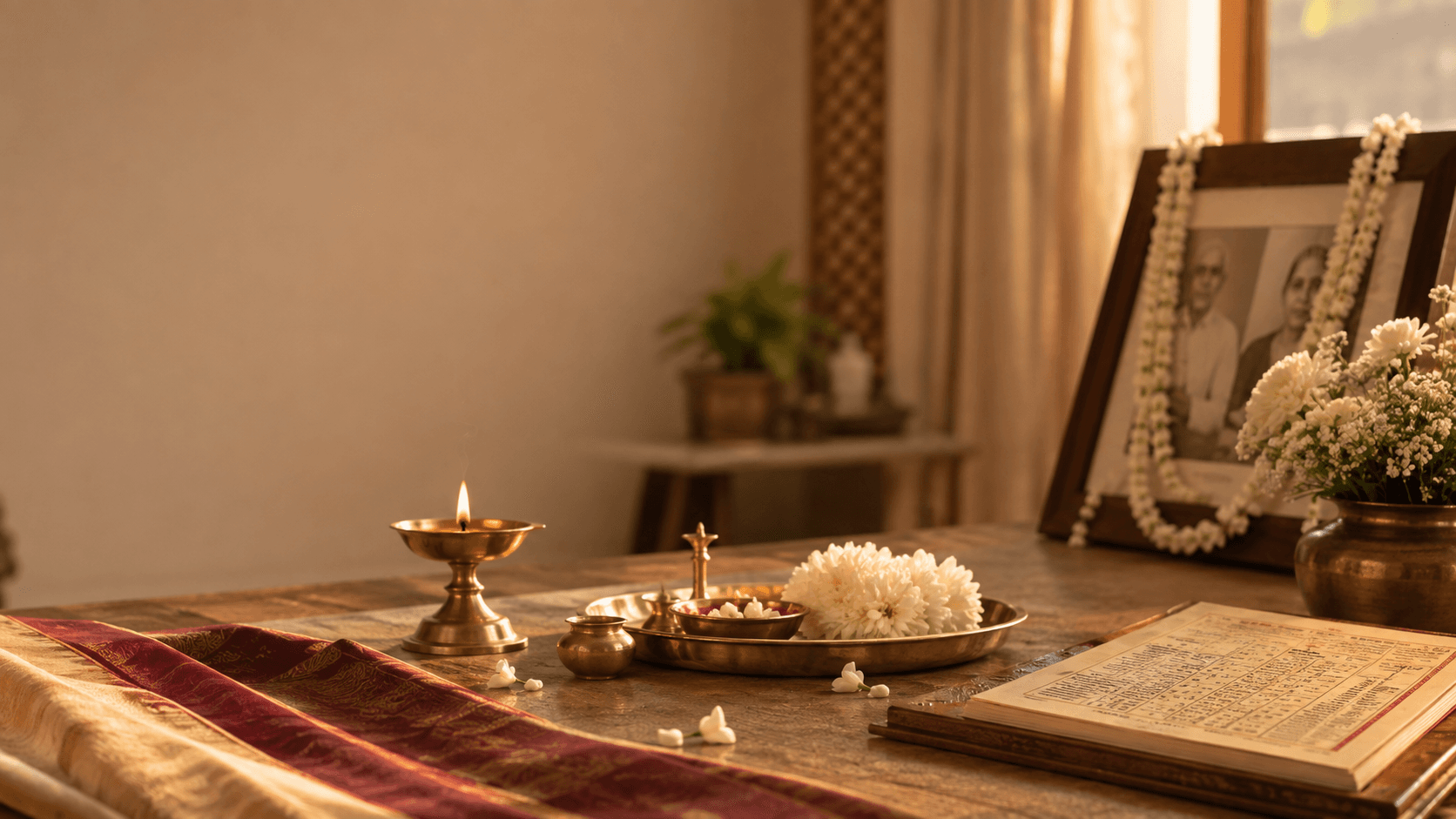
- a family priest, or a reliable Panchang calculation, can help identify it;
- the place of passing and, sometimes, the time can matter for a precise calculation;
- where your family already has an established tradition, that tradition should take precedence.
We are not the final ritual authority
Roots & Seva can help you think it through, but we don't claim to be the final authority on ritual timing for every family. Where exact timing matters, a knowledgeable priest or trusted Panchang source is the right guide.
What about Sarvapitri Amavasya?
The concluding Amavasya of Pitru Paksha — Sarvapitri Amavasya — is traditionally significant for remembering ancestors more broadly. It can be meaningful, but we would not simply tell you to substitute it automatically for a known tithi; that is a decision for your family and tradition.
Share whatever you know when you arrange a seva. If a date or tithi needs confirming before scheduling, we'll talk it through with you — gently, and without pretending to be an authority we are not.
Sources & tradition notes
Hindu practices vary by region, family and sampradaya. This article is intended as an accessible introduction rather than a replacement for guidance from your family's priest or tradition.
- Annual Shraddha is traditionally observed on the lunar tithi of passing rather than only the Gregorian date.
- Where exact ritual timing matters, a family priest or a reliable Panchang authority is the appropriate guide.