What is Purnima?
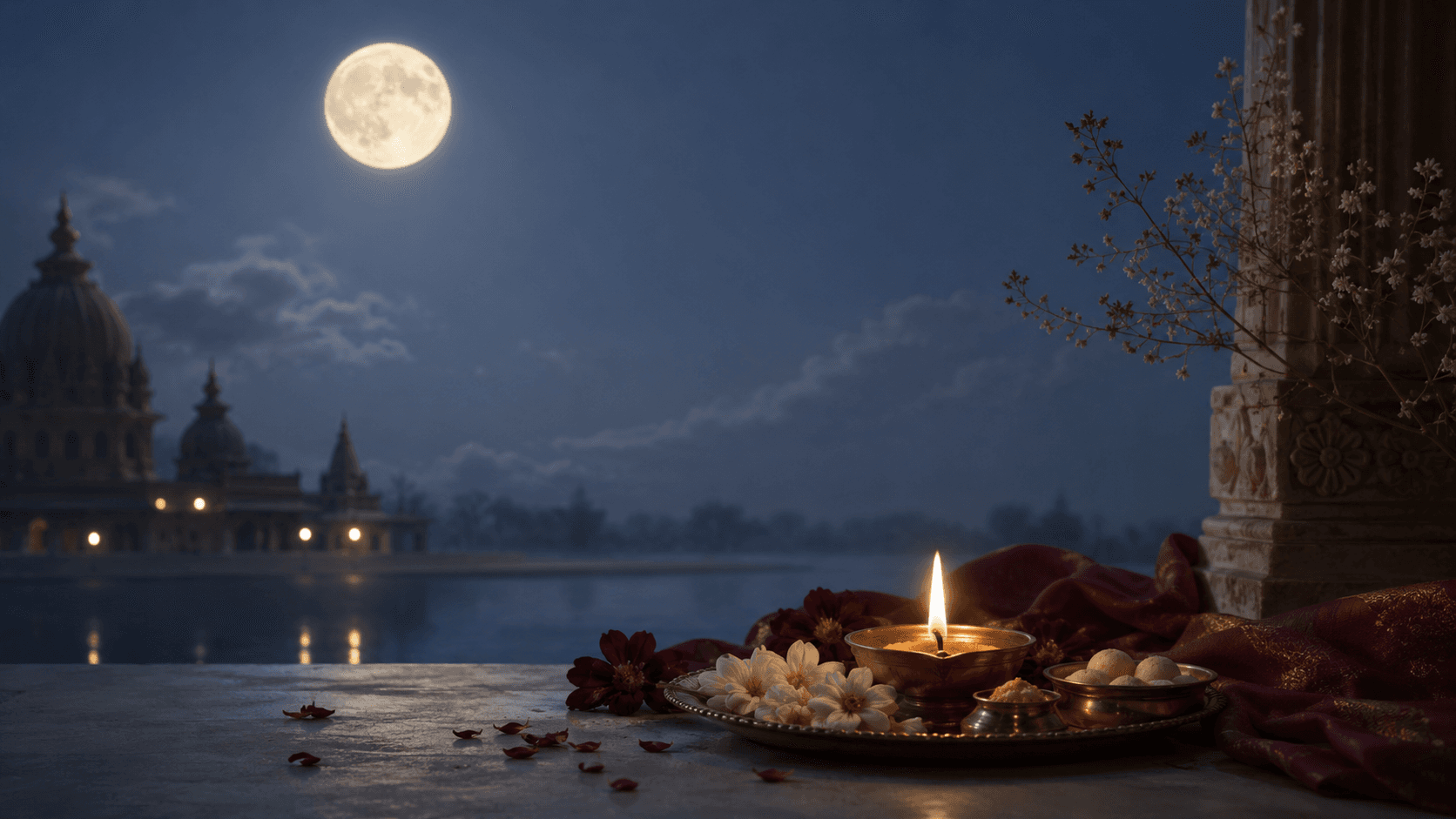
Purnima is the full-moon tithi — the completion of the waxing fortnight (Shukla Paksha), when the moon is fully visible. Like Amavasya, it returns about once a lunar month.
Is every Purnima observed the same way?
No. Different full moons carry different significance and are observed differently — for example Guru Purnima, Sharad Purnima and Kartik Purnima each have their own character. The observance varies from one Purnima to another and from region to region.
For this reason, Purnima should not be treated as simply another ancestor- remembrance day equivalent to Amavasya.
Vrata and worship
Many Purnima traditions include a vrata (observance or fast), worship and prayer or japa. The full moon has long been seen as an auspicious time for devotion in a broad sense.
Where does daan fit?
Some traditional Purnima-vrata procedures include giving food, clothes, ghee, sesame or rice, and feeding a Brahmin before the fast is concluded. The exact observance varies by Purnima, so we don't claim one single practice applies to every full-moon day.
Why arrange a seva?
Where it feels meaningful, an act of Anna Daan or another seva can be a simple, voluntary way to mark the day with gratitude — offered in devotion, not as an obligation.
We can arrange a simple act of seva to mark a Purnima you'd like to observe. It is a voluntary act of devotional giving — see Anna Daan or seva for meaningful occasions.
Sources & tradition notes
Hindu practices vary by region, family and sampradaya. This article is intended as an accessible introduction rather than a replacement for guidance from your family's priest or tradition.
- Traditional monthly Purnima-vrata descriptions associated with worship, fasting and, in some procedures, daan and feeding a Brahmin before the fast is concluded.
- Observances differ by the specific Purnima and by regional tradition.